
What Are Casement Windows?
Casement windows are windows whose opening sashes are hinged on one edge, so they swing outwards like a door rather than sliding. A side-hung casement pivots on its left or right edge; a top-hung casement, often called a top light or vent, pivots from the top and pushes out at the bottom. Most of Staffordshire's post-war housing was built with casements, and when the Potteries terraces lost their original sashes in the 1970s and 1980s, casements were usually what replaced them. Today they are the most commonly fitted window in the county, made in uPVC, aluminium or timber.
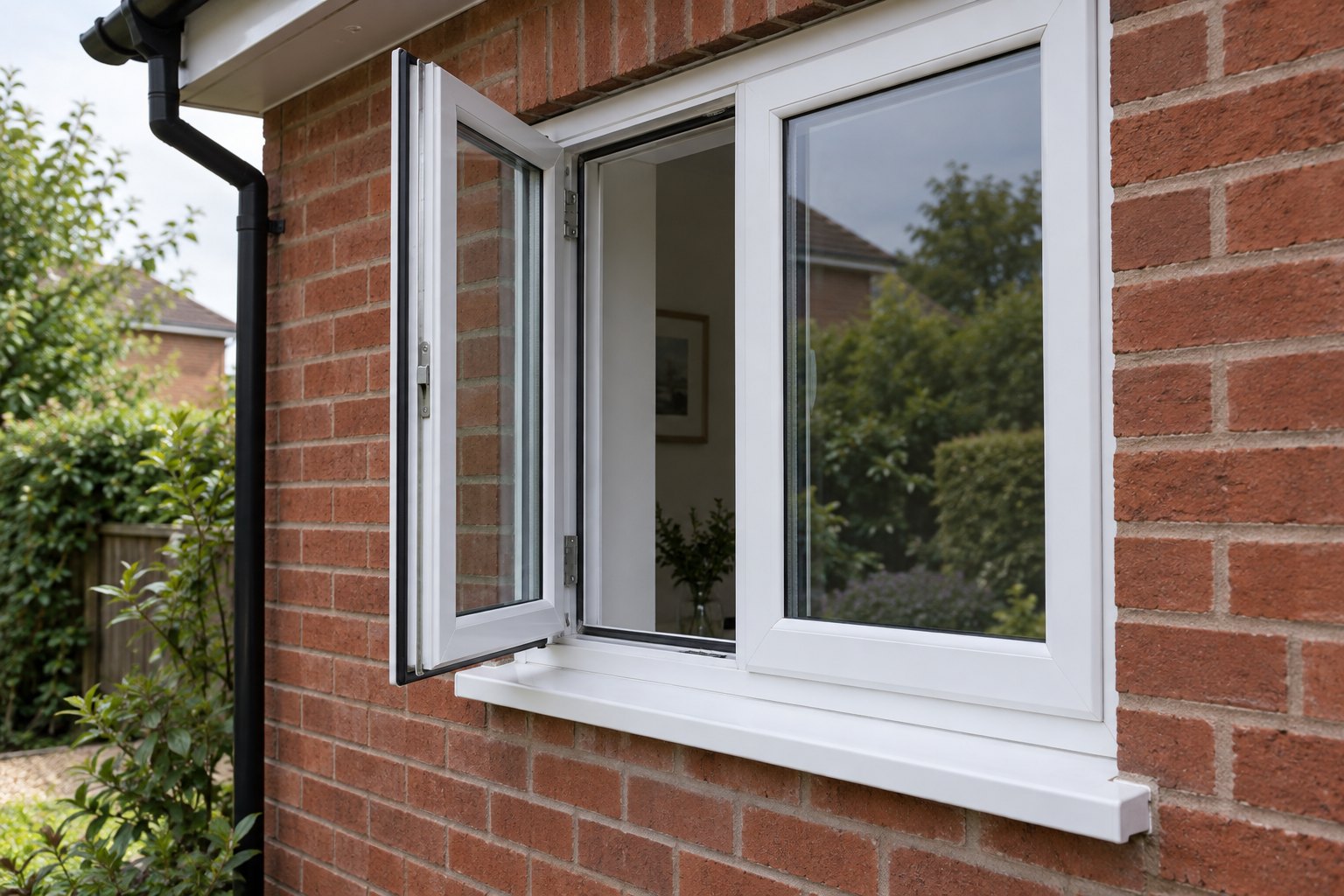
People usually look at new casements for one of three reasons: the existing uPVC has worn out after thirty-odd years, a timber casement has rotted beyond sensible repair, or the house is being modernised and the owner wants better insulation, security and a cleaner look. Because every frame is made to measure, you can change the arrangement of fixed and opening panes at the same time.
Signs Your Casement Windows Need Replacing
- The opening sash has dropped on its friction hinges and scrapes the bottom of the frame as it closes
- You have to lean on the handle to lock it, or the handle turns without the locking points engaging
- The rubber gaskets around the sash have shrunk, hardened or come away, letting in cold air along the edge
- The white uPVC has yellowed, turned powdery or cracked at the welded corners
- Water sits on the cill and finds its way inside in driving rain because the drainage slots are blocked or the frame has bowed
- A small top light is the only opening pane, so the room is hard to ventilate and has no usable escape window
Casement Window Styles and Materials
- Chamfered uPVC. The plainest profile, with angled edges on the frame and sash. Usually the least expensive option and the look most people associate with standard double glazing.
- Sculptured uPVC. Softer, rounded edges that give a slightly more traditional feel, often chosen for 1930s semis and older brick houses.
- Aluminium. Much slimmer frames and more glass for the same opening, in powder-coated colours. Costs more than uPVC but suits modern extensions and contemporary refurbishments.
- Timber. Engineered softwood or hardwood casements, factory-finished and double glazed. Needs repainting every few years but is often preferred on period properties.
- Storm-proof sashes. The sash overlaps the frame when shut, which improves weather resistance. The alternative is a flush sash, which sits level with the frame and is covered on our flush casement windows page.
What to Include When Asking for a Quote
Go round the house and note which panes open now and which you would like to open in future. A casement quote is priced sash by sash, so the difference between a two-pane window with one opener and a three-pane window with two openers is real money. If a bedroom window will be the escape route from a loft conversion or first-floor room, say so; the design needs to provide the required clear opening, sill height and suitable hardware.
Describe the current frames and what surrounds them. Old timber casements are sometimes set in a separate timber sub-frame that may be rotten; old uPVC may have been fitted with a plastic cill that was glued over the original concrete or stone cill. On a Potteries terrace, mention if the windows sit under a stone or brick head that shows cracking, because a failed lintel changes the job.
A useful casement quote lists every window with its width, height, number of opening sashes, hinge type, profile, colour and glass, and states whether trickle vents, restrictors and key-locking handles are included. It should also say whether new cills and internal window boards are part of the price and how the frames will be fixed into the brickwork.
How Much Do Casement Windows Cost?
| Job size | Typical cost |
|---|---|
| One small white uPVC casement, such as a bathroom or kitchen window | £350 – £900 |
| Front or back elevation of a terrace or semi, three to five windows | £1,800 – £4,000 |
| Whole house in uPVC, or fewer windows in aluminium or timber | £4,000 – £7,000+ |
These figures are a guide, not a quotation. Colour foils, larger panes, triple glazing and upgraded hardware all push the price up. Confirm whether VAT, disposal of the old windows and making good are included.
The Casement Replacement Process
- Survey. The installer measures each opening, checks the head, cill and reveals, and agrees the style, colour, glass and opening layout with you.
- Manufacture. The frames are fabricated to size. White uPVC usually has the shortest lead time; foiled colours, aluminium and timber take longer.
- Removal. On the day, the old sashes and glass are taken out, the outer frame is cut free, and the opening is cleaned back ready for the new frame.
- Fitting. The new frame is set on packers so it sits level and square, fixed into the masonry with frame screws or brackets, glazed and sealed.
- Finishing. Cills, trims and window boards are fitted, the sashes are adjusted to close evenly, and the installer runs through the locks and vents before registering the job.
Planning Permission and Building Regulations
On a house, replacing casements with new windows of a similar appearance is normally permitted development and does not need planning permission. Window changes affecting a listed building's special character need listed building consent, and flats do not have the same permitted development rights. Some conservation areas in Staffordshire, including parts of Lichfield, Leek and Stone, may have Article 4 directions that bring window changes on front elevations under planning control. The Planning Portal explains the general position; your district or borough council can confirm it for your address.
Replacement casements must meet the Building Regulations on thermal performance, ventilation, safety glazing and, for some rooms, means of escape. An installer registered with a competent person scheme such as FENSA or Certass can self-certify the work and you will receive a certificate. Without that, a building control application is needed.
How to Choose a Casement Window Installer
- Which profile system do you use, and can I see a corner sample before I order?
- What whole-window energy rating will these windows achieve?
- Which windows will have egress hinges, and do they meet the escape size requirement?
- How will the frames be fixed, and what happens if the lintel or cill is found to be damaged?
- Are you registered with a competent person scheme, and will you register this job?
- How long are the guarantees on the frames, sealed units, hardware and workmanship?
Frequently Asked Questions
Is it worth repairing a casement window instead of replacing it?
Often, yes. A dropped sash can usually be fixed with new friction hinges, and worn handles, gearing and gaskets can be replaced if parts are still available. Replacement makes more sense when the frame itself is cracked, bowed or rotten.
What is the difference between side-hung and top-hung casements?
A side-hung casement opens from a hinge on its left or right edge, like a door. A top-hung casement is hinged at the top and pushes outwards from the bottom, which makes it good for ventilation in light rain but less useful as an escape route.
How long does it take to fit new casement windows?
An experienced team can usually replace six to ten standard casements in a day. A whole house typically takes one to two days, depending on size, access and how much making good is needed around the openings.
Do new casement windows need trickle vents?
Usually. Under the current ventilation rules, replacement windows in rooms without other suitable ventilation generally need background vents such as trickle vents. The installer should check the existing ventilation in each room and explain what is needed.