
What Are Sash Windows?
Sash windows are windows with one or two glazed panels, called sashes, that slide up and down within a frame instead of swinging open on hinges. Traditional timber sash windows are counterbalanced by cast-iron weights hidden in a hollow box frame, connected to the sashes by cords running over pulleys. Modern versions use spiral balances or spring mechanisms instead. The sash window is the defining window of Georgian and Victorian Britain, and in Staffordshire you will find it on the Georgian townhouses of Lichfield, Stafford, Stone and Leek, the villas of Hartshill and the larger Victorian terraces of Burton upon Trent and the Potteries.
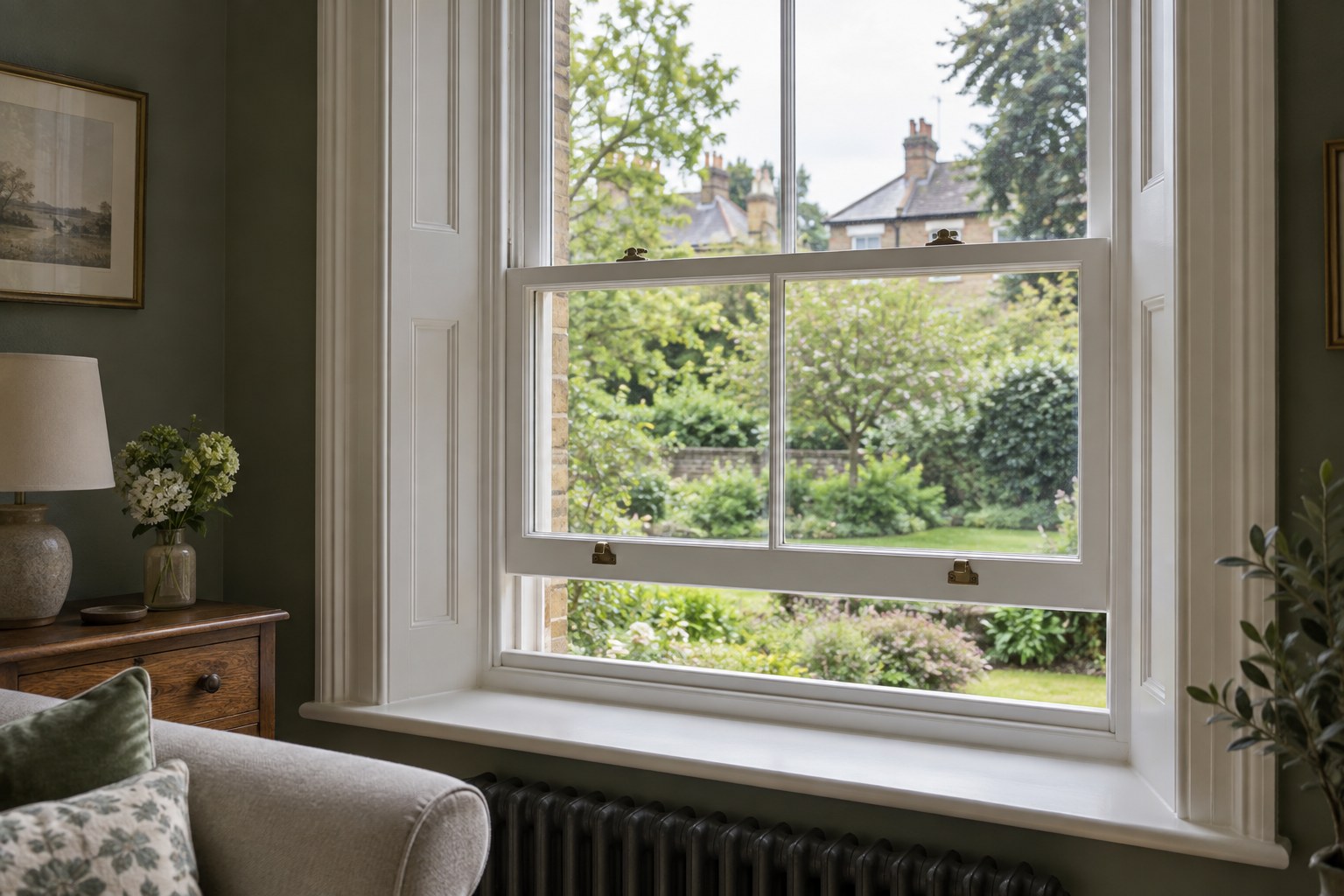
Many Staffordshire terraces lost their sashes to casements in the later twentieth century. Replacing those casements with new sashes is now a common way to restore the look of a period frontage. Where original sashes survive, the choice is usually between careful restoration, double glazed timber replacements, or uPVC vertical sliders.
Signs You Need New or Restored Sash Windows
- A sash cord has broken, so the sash drops or has to be propped open
- The sashes rattle in the wind and let in cold draughts at the meeting rails and sides
- The bottom rail or cill is soft and crumbles when pressed with a screwdriver
- The sashes are painted shut or swell and stick every winter
- An existing uPVC vertical slider has a failed balance and will not stay open
- You want to replace unsympathetic casements on a period house with sashes that suit its age
Sash Window Options Explained
- Restoration and draught-proofing. Sound original sashes are overhauled: new cords, repaired or spliced timber, brush seals fitted into the staff and parting beads, and the sashes eased and re-hung. This keeps the original glass and character.
- New timber sashes in the original box. Where the box frame is sound but the sashes are not, new double glazed sashes can be made to fit, keeping the original frame and weights.
- Full timber replacement. A complete new box sash window, usually in engineered softwood or hardwood, with slim double glazing, cords and weights or spiral balances.
- uPVC vertical sliders. uPVC frames that slide vertically, balanced with springs, often with a tilt-in function for cleaning. Lower maintenance and less expensive, though usually with bulkier frames than timber.
- Glazing patterns. Two-over-two and one-over-one are typical of Victorian houses, six-over-six of Georgian buildings. Horns on the upper sash are a period detail worth matching.
What to Include When Asking for a Quote
Start by saying what state the existing windows are in and whether you want to keep them. If the sashes are original timber, a specialist may recommend restoration over replacement. Describe the problems you notice: broken cords, rot in the bottom rails or cill, rattling, draughts, sashes painted shut. Photographs of the cill and the lower corners of the sashes show a surveyor a great deal about the likely amount of timber repair.
Note the glazing pattern and whether there are horns on the upper sashes, any original crown or cylinder glass worth keeping, and any shutters or panelled linings inside. Say whether the house is listed or in a conservation area; many of Lichfield's and Stafford's sash windows are, and consent affects what can be done and in which material.
A restoration quote should itemise cord replacement, timber repairs, draught-proofing and redecoration per window. A replacement quote should state the material, the balancing system, the glass thickness and pattern, whether horns and period mouldings are included, and whether the box frame is being kept or replaced. Ask how the internal linings and plaster will be treated if the box frame comes out.
How Much Do Sash Windows Cost?
| Job size | Typical cost |
|---|---|
| One uPVC vertical slider, or a full restoration of one timber sash | £900 – £2,000 |
| Front elevation of a terrace in uPVC, or two or three timber replacements | £2,000 – £7,000 |
| Whole house of double glazed timber box sashes | £7,000 – £16,000+ |
These are guide figures, not quotations. Hardwood, slimline heritage glazing, large or arched sashes, and scaffolding for upper floors all increase the price. Confirm whether VAT and decoration are included.
The Sash Window Process
- Condition survey. The specialist inspects every sash, box frame and cill, and recommends restoration, new sashes or full replacement for each window.
- Consent if required. For listed buildings or Article 4 areas, drawings and details are prepared for the planning authority.
- Joinery. Timber sashes and box frames are made in a workshop, usually over several weeks. uPVC vertical sliders are fabricated to size.
- On-site work. For restoration, sashes are removed, repaired, re-corded and re-hung, often one window at a time. For replacement, the old window is taken out and the new frame fitted, weighted or balanced and adjusted.
- Finish. Beads and linings are refitted, the window is decorated if agreed, and the specialist checks each sash runs smoothly and locks.
Planning Permission and Building Regulations
Replacing sash windows on an unlisted house with new sashes of similar appearance is usually permitted development. Replacing sashes with casements, or timber with uPVC, can be refused in conservation areas where an Article 4 direction is in force. Work affecting the special character of a listed building needs listed building consent; ask the conservation officer which repairs or alterations require it, and repair is generally favoured over replacement. Historic England’s guidance on traditional windows sets out the approach many conservation officers take.
New sash windows must meet the Building Regulations like any replacement window, and a competent person scheme member can self-certify them. Restoration and draught-proofing of existing sashes is a repair and does not need certification. Ask whether a first-floor sash needs to act as an escape window, since some sliders have a limited opening.
How to Choose a Sash Window Specialist
- Do you offer restoration as well as replacement, and which would you recommend for my windows?
- Will you keep the existing box frames and weights, or replace them?
- What glazing will you use, and how thick will the glazing bars need to be?
- Can you match the horns, mouldings and glazing pattern of my original windows?
- Have you worked on listed buildings or in conservation areas locally?
- How long will the finish last, and what maintenance will the windows need?
Frequently Asked Questions
Can old sash windows be repaired instead of replaced?
Very often. Broken cords, loose beads, draughts and localised rot can be repaired, and sound sashes can be fitted with draught-proofing brushes. Full replacement is usually only needed where the timber has decayed extensively.
Are uPVC sash windows a good alternative to timber?
They are cheaper and need less maintenance, but the frames are usually bulkier and they rarely match the fine proportions of timber. They are often unsuitable for listed buildings or conservation areas with an Article 4 direction.
Can I have double glazing in a timber sash window?
Yes. New timber sashes can take slim double glazed units, and heavier sashes are balanced with heavier weights or stronger spiral balances. On listed buildings, the planning authority decides whether double glazing is acceptable.
How long does it take to fit sash windows?
Replacing a single sash window usually takes most of a day. A full house of timber sashes may take several days, and restoration work is often done one window at a time over a week or more.