
What Are Flush Casement Windows?
Flush casement windows are casements whose opening sashes close completely level with the outer frame, rather than overlapping it as a standard storm-proof sash does. This was how timber casements were built before the 1960s, so a flush casement gives a crisp, traditional face to the window with no visible step between frame and sash. Modern versions are made in painted timber, in uPVC systems designed to imitate timber joinery, and in aluminium.
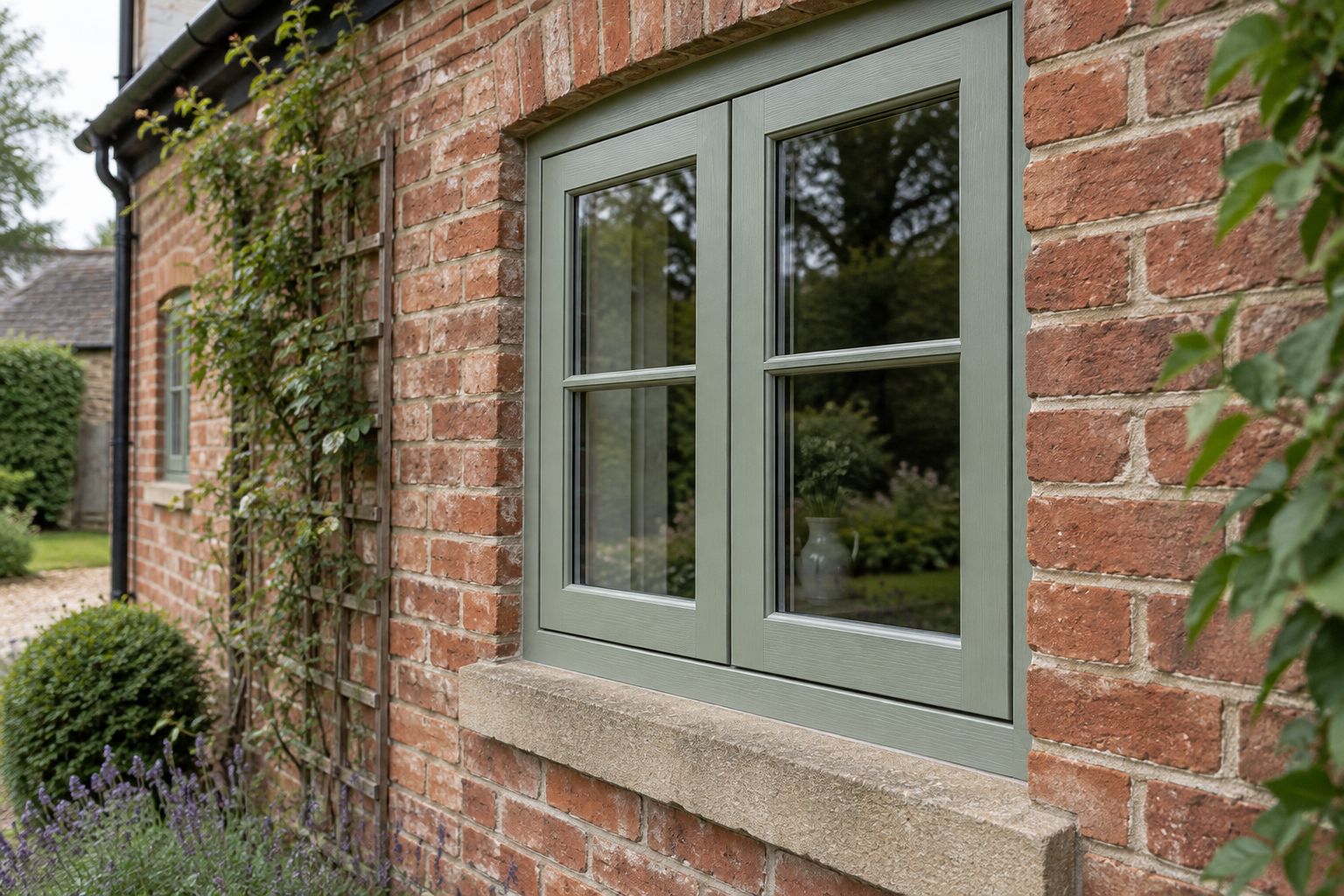
In Staffordshire, flush casements are a popular choice for Victorian and Edwardian terraces in Stoke-on-Trent, Newcastle-under-Lyme and Burton upon Trent where the original windows have long gone, for 1930s houses whose owners want to reverse an unsympathetic 1980s refit, and for homes in conservation areas where the council prefers a timber appearance. They cost more than a chamfered casement, and people usually choose them for the way they look.
Signs a Flush Casement Could Suit Your Home
- Your current uPVC windows have a thick stepped sash that looks heavy against old brickwork
- You are replacing rotten original timber casements and want the same flat profile again
- Neighbouring houses in the street still have their original flush timber windows and yours stand out
- You want a heritage colour such as a dark green, cream or grey rather than white
- The house is in a conservation area, and a standard storm-proof sash may not be acceptable
- You are selling or refurbishing a period home and want windows that suit its age
Flush Casement Options Explained
- Flush sash uPVC systems. Purpose-made uPVC profiles with mechanically jointed or welded corners, woodgrain foils and heritage hardware. Low maintenance and the most common choice.
- Timber flush casements. Engineered softwood or hardwood, factory-painted and double glazed. Needs repainting every six to ten years but is the traditional material and often preferred in conservation areas.
- Aluminium flush casements. Slim steel-look frames in powder-coated colours, suited to Crittall-style or contemporary looks.
- Welded versus mechanical joints. Some uPVC systems use mechanical joints that mimic the square corners of timber joinery; others are welded, leaving a visible line. Ask to see both.
- Hardware and details. Butt hinges, monkey-tail or pear-drop handles, stays and pins, and run-through or bonded glazing bars all affect the final look.
What to Include When Asking for a Quote
Since the main reason for choosing flush casements is appearance, tell the installer what you are trying to match. A photo of the original windows on a neighbouring house, or of your own before they were replaced, is more useful than a description. Say whether you want the frames finished in the same colour inside and out, or a different colour inside, as dual-colour foils and paint schemes affect price and lead time.
Mention the specific details you care about: square mechanical corners, butt hinges rather than friction stays, a particular glazing-bar layout, heritage handles. If the house is in a conservation area such as those in Lichfield, Stone or the older parts of Newcastle-under-Lyme, say so, and share anything the planning department has told you about what they will accept.
A good flush casement quote names the specific profile system or timber species, the corner joint type, the foil or paint colour for each face, the glazing bar type and the hardware style for every window. It should also confirm the whole-window energy rating, since some flush systems have slightly deeper frames than standard casements.
How Much Do Flush Casement Windows Cost?
| Job size | Typical cost |
|---|---|
| One flush casement in woodgrain uPVC | £700 – £1,500 |
| Front elevation of a terrace or semi, three to five windows | £3,500 – £7,000 |
| Whole house in flush uPVC, or several windows in painted timber | £7,000 – £12,000+ |
These are guide figures, not quotations. Dual colours, glazing bars, heritage hardware and timber frames all raise the cost. Check whether VAT, disposal and making good are included.
The Flush Casement Process
- Choose the look. Compare corner samples, colours and hardware, ideally in daylight against your own brickwork.
- Survey. Each opening is measured and the installer agrees the sash layout, glazing-bar pattern and opening direction for every window.
- Manufacture. Flush systems and foiled colours generally have longer lead times than white casements, often several weeks.
- Installation. Old frames come out, the new frames are fixed and sealed, and the sashes are adjusted so they sit truly flush when closed.
- Final check. The installer checks the sash gaps, hinges and locks, fits trims and cills, and explains any care instructions for the finish.
Planning Permission and Building Regulations
Replacement windows of similar appearance may be permitted development on a house. A flush profile does not by itself mean that a change of style or material is permitted. On listed buildings, listed building consent is needed and the council may insist on timber. In conservation areas with Article 4 directions, planning permission may be needed for changes to front elevations, and the council may state a preferred material. The Planning Portal covers the general rules.
Like any replacement window, a flush casement must meet the Building Regulations for thermal performance, ventilation and safety glazing. Trickle vents can be concealed in the head of the frame on many systems. A competent person scheme installer can self-certify the work and send you the certificate.
How to Choose a Flush Casement Installer
- Which flush system or timber supplier do you use, and why?
- Are the corners mechanically jointed or welded?
- Can I see a finished window, or visit a job you have completed nearby?
- Where will the trickle vents go, and will they be visible?
- What is the lead time for my chosen colour?
- What guarantee covers the foil or paint finish, separately from the frame?
Frequently Asked Questions
What is the difference between a flush casement and a standard casement?
On a flush casement, the opening sash sits level with the outer frame when closed. On a standard storm-proof casement, the sash overlaps the frame, creating a visible step. Flush casements look more like traditional timber windows.
Are flush casement windows less weatherproof?
Modern flush systems are tested to the same weather and security standards as standard casements, using gaskets and multi-point locks. Fitting quality matters, so ask to see the system's test ratings.
Why are flush casements more expensive?
The profiles are more complex, the corners may be hand-finished, woodgrain foils cost more than white, and heritage hardware adds to the price. Timber versions also involve joinery and painting.
Will a council accept uPVC flush casements in a conservation area?
Some councils accept good-quality flush uPVC in conservation areas that do not have an Article 4 direction; others prefer timber. For a listed building, timber is usually expected. Ask the council before ordering.