
What Are Cottage Windows?
Cottage windows are small, usually casement-style windows divided into several panes by glazing bars, made to suit the low ceilings, thick walls and modest openings of traditional cottages. They are not a single product so much as a look: slim frames, a vertical or horizontal glazing-bar pattern, often a small top-hung vent, and proportions that match the building rather than a standard catalogue size. In Staffordshire they belong on the gritstone cottages of the Moorlands around Leek, Longnor and Ipstones, the red-brick farm cottages of the Trent Valley, the canal-side cottages along the Trent and Mersey at Stone, Great Haywood and Alrewas, and the estate cottages of villages such as Abbots Bromley and Brewood.
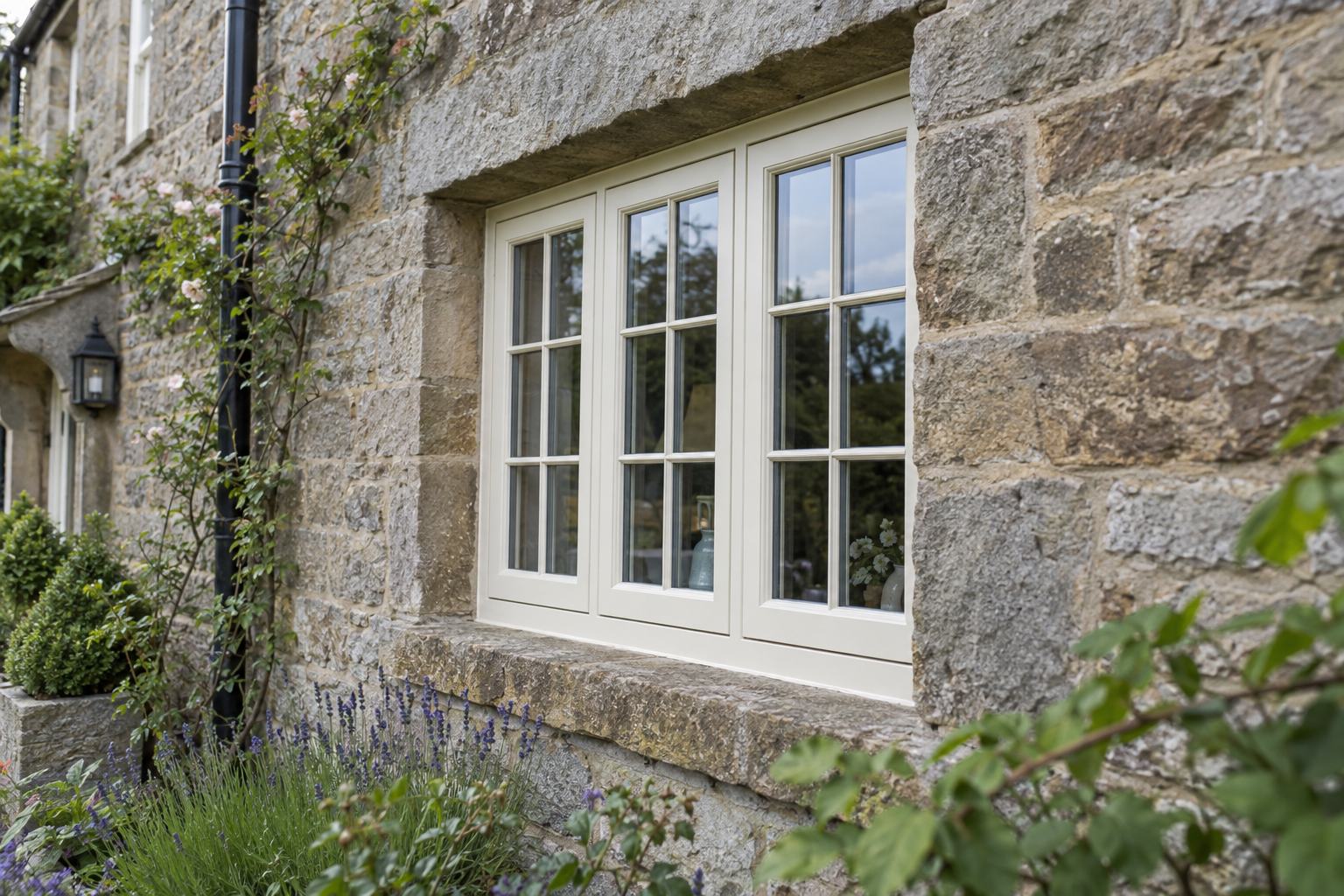
Many of these homes had their original timber windows replaced with standard uPVC decades ago, often with chunky frames that swallow the glass in a small opening. A common request is to restore a more traditional appearance while keeping the warmth of double glazing, and that is where proper cottage windows come in.
Signs Your Cottage Needs New Windows
- Heavy uPVC frames leave very little glass in small openings, making rooms darker than they should be
- Original timber casements have soft bottom rails, open joints or putty that has fallen out of the glazing rebates
- The windows rattle or let in draughts because the timber has shrunk or the frame no longer fits a slightly out-of-square opening
- Stick-on "Georgian bar" strips have peeled or look obviously false
- Damp patches or black mould appear on the deep stone reveals around the frame each winter
- You are restoring the cottage and want windows that suit its age and the character of the village
Cottage Window Options Explained
- Timber flush casements. Painted softwood or engineered timber with flush sashes and slim glazing bars. The most authentic option and the usual starting point for listed or conservation-area cottages.
- Heritage-style uPVC. Flush or slim-profile uPVC in woodgrain or painted-look foils, with bars to match. Lower maintenance than timber; acceptability depends on where the cottage is.
- Through-bars. Glazing bars that genuinely divide the glass into separate small units. Traditional in appearance but heavier and more expensive.
- Bonded or planted bars. Bars fixed to both faces of a single sealed unit, with a spacer bar between the panes lining up behind them. Looks convincing from outside and performs better thermally than individual small units.
- Slimline heritage glazing. Thinner double glazed units that fit narrower rebates, sometimes used where a conservation officer wants the frame to look as close as possible to the original.
- Repair and draught-proofing. Where original timber windows survive, splicing in new timber and adding draught seals may be preferable to replacement, especially on listed buildings.
What to Include When Asking for a Quote
Measure, or at least estimate, the thickness of the walls. A gritstone cottage wall in the Moorlands can be two feet thick, and that affects how the new frame is set back in the reveal, how the cill is detailed and how much internal making good follows. Tell the installer whether the existing windows sit near the outer face of the wall or further back, because moving that position changes how the cottage looks from the lane.
Describe the glazing pattern you want and whether you have old photographs showing the original windows. Say whether the cottage is listed, in a conservation area or inside the Peak District National Park, and whether you have already spoken to the planning authority. For timber windows, say whether you want them delivered factory-finished or painted on site, and what colour.
Because cottage openings are rarely square or level, the quote should confirm that each window will be measured individually, explain how the frame will be packed or scribed to fit an uneven reveal, and state whether the lintel, cill and internal window boards are included. Ask for the type of glazing bar, the unit thickness and the finish to be written into the specification.
How Much Do Cottage Windows Cost?
| Job size | Typical cost |
|---|---|
| One small cottage casement in heritage-style uPVC | £400 – £1,100 |
| Three to five cottage windows in uPVC, or one or two in timber | £2,000 – £5,000 |
| A whole cottage in timber with glazing bars throughout | £5,000 – £9,000+ |
These are guide figures, not quotations. True through-bars, hardwood, slimline heritage glazing and site painting all increase the price. Remember to ask whether VAT and making good the reveals are included.
The Cottage Window Process
- Survey and record. The installer measures each opening at several points, notes the wall thickness and frame position, and photographs the existing windows for reference.
- Consents if needed. For listed cottages or those under an Article 4 direction, drawings and a specification go to the planning authority before anything is ordered.
- Joinery or fabrication. Timber windows are made in a joinery workshop, often with longer lead times than uPVC; heritage uPVC is fabricated to the same individual sizes.
- Careful removal. Old frames are cut out with as little disturbance to the stonework and lime plaster as possible.
- Setting and pointing. The new frame is packed to suit the uneven opening, fixed, and sealed. On older walls, a lime-based mortar or sealant may be more suitable than cement or silicone.
Planning Permission and Building Regulations
If the cottage is listed, any change to its windows, including like-for-like replacement, generally needs listed building consent, and you should speak to the council's conservation officer before ordering. Cottages in conservation areas with Article 4 directions may need planning permission for window changes on some elevations. Parts of the Staffordshire Moorlands fall within the Peak District National Park, where the Peak District National Park Authority handles planning. Elsewhere, like-for-like replacement on an unlisted house is usually permitted development.
Replacement windows must still meet the Building Regulations, but there is some flexibility for historic buildings where full compliance would harm their character. A competent person scheme installer can usually self-certify the work; otherwise building control should be consulted. Ask how the installer will balance thermal performance with the look the planning authority expects.
How to Choose a Cottage Window Specialist
- Have you fitted windows in stone or solid-wall cottages before, and can I see examples?
- Do you make timber windows yourselves, or buy them from a joinery supplier?
- What kind of glazing bar will you use, and can I see a sample?
- How will you deal with an opening that is out of square?
- Will you use lime mortar or a breathable sealant around the frame?
- Have you dealt with conservation officers or the national park authority on similar jobs?
Frequently Asked Questions
Can I have uPVC cottage windows on a listed cottage?
It is unlikely. Most conservation officers expect timber windows on listed buildings, and consent is needed for changes affecting the listed building's special character. For an unlisted cottage outside a conservation area, heritage-style uPVC is usually acceptable.
Are bonded glazing bars as good as real ones?
From a normal viewing distance they look very similar, and they perform better thermally because the glass is one sealed unit. Through-bars are more authentic and are sometimes required on listed buildings.
Why do cottage windows cost more than standard windows of the same size?
Each one is individually sized for an uneven opening, the frames are slimmer and more detailed, and glazing bars add manufacturing time. Timber versions also need finishing and usually take longer to make.
Will new cottage windows cause condensation on my stone walls?
New windows reduce draughts, so moisture that used to escape may linger unless the room is ventilated. Trickle vents, extractor fans and keeping breathable materials around the frame all help reduce condensation on solid walls.